

"Wireless" Bioengineering: DBMN and DIEF Researchers Present Wireless "Micro-BOTs" for Deep Brain Monitoring
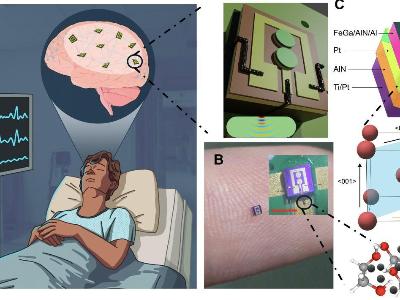
Unimore has marked a significant breakthrough in the field of neurotechnology with the publication of a study that lays the foundations for new therapeutic devices for brain care.
The article, published in the prestigious journal Science Advances , presents the results of a collaboration primarily between Unimore—the result of a synergy between the Department of Biomedical, Metabolic and Neural Sciences and the "Enzo Ferrari" Department of Engineering—and the University of Glasgow, funded by the European Commission (www.crossbrain.eu).
The research teams have demonstrated the development of bio-integrated electronic devices capable of operating in ultra-wideband (3–4 GHz), enabling high-fidelity wireless telemetry within brain tissue. This technology overcomes the limitations of current neural interfaces, paving the way for safer implantable devices for the treatment of neurodegenerative disorders, such as Parkinson's, and for the clinical monitoring of epilepsy.
"This is a significant technological milestone," says Professor Michele Giugliano from the Department of Biomedical, Metabolic and Neural Sciences, co-director of the study, "which highlights the excellence of our new Master’s Degree in Bioengineering for Innovation in Medicine, launched at UNIMORE in 2024."
"The design of the micro-BOTs," emphasises Professor Luca Selmi from the "Enzo Ferrari" Department of Engineering, co-author of the study, "perfectly exemplifies the main objective of bioengineering in Modena, made possible by close interdepartmental collaboration: combining the quantitative tools and language of bioengineering with the pressing needs of clinical and medical practice."
Categorie: International - english, Notizie_eng
Articolo pubblicato da: Ufficio Stampa Unimore - ufficiostampa@unimore.it il 02/07/2026