
Unimore joins the European ALERT project: a new frontier in the early diagnosis of Alzheimer’s disease
Alzheimer’s disease represents one of the major global healthcare challenges: over 50 million people are affected, and this number is expected to triple by 2050. Notably, disease biomarkers begin to change as early as 10–15 years before clinical symptoms appear, opening a crucial window for early diagnosis and timely intervention.
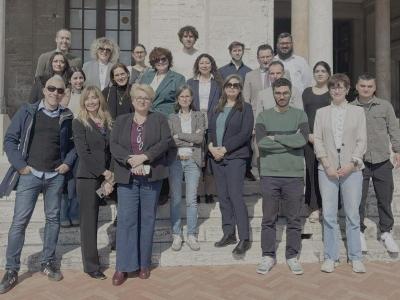
In this context, ALERT has just been launched — a three-year European research project bringing together an international consortium of excellence. It is coordinated by Professor Giuseppe Barillaro, bioengineer and lecturer in electronic engineering at the University of Pisa, and involves the University of Modena and Reggio Emilia through Professor Daniela Giuliani, pharmacologist in the Department of Biomedical, Metabolic and Neurosciences. The project also includes Professor Fiorenza Rancan (an expert in nanotechnology and skin models) from the Charité University Hospital in Berlin, Professor Silvia Giordani, a nanomaterials specialist at Dublin City University, and Dr Cosimo Puttili, Director of Research and Innovation at AB Medica, a leading Italian company in medical technologies, surgical robotics, telemedicine and healthcare innovation.
“The ALERT project aims to revolutionise Alzheimer’s diagnosis through innovative, non-invasive technologies,” explains Professor Giuliani. “The goal is to develop a system capable of detecting disease biomarkers early directly in blood plasma, offering a faster, more accessible and cost-effective solution compared to current methods.”
At the heart of the project is the QRc-MN sensor (QR code microneedle): a patch equipped with biodegradable microneedles, thinner than a human hair, which gently penetrate the skin to reach the bloodstream. These microneedles can monitor key Alzheimer’s biomarkers in real time, generate a fluorescent QR code encoding the detected concentrations, and transmit the data wirelessly to an electronic device and a dedicated app.
The system delivers results within minutes, eliminating the need for invasive sampling, complex laboratory analyses and long waiting times. After use, the microneedles naturally dissolve, removing the need for any extraction procedure.
According to Dr Eleonora Vandini, a collaborator of Professor Giuliani, “this technology will enable earlier diagnosis that is simpler, faster and more affordable.”
Current diagnostic methods for Alzheimer’s — based on clinical symptoms, neuropsychological testing or cerebrospinal fluid analysis — have significant limitations, including invasiveness, high costs and lengthy procedures. ALERT overcomes these issues by introducing a minimally invasive approach, rapid real-time diagnosis, and a scalable technology suitable for outpatient settings such as day hospitals.
The issue is also highly relevant from an economic perspective: direct and indirect costs related to Alzheimer’s disease in the European Union could exceed €350 billion per year. Early diagnosis is therefore a key factor for sustainable long-term care strategies.
The Unimore team involved in ALERT also includes Professor A. Ottani (pharmacologist), who highlights that the sensor “will introduce a radical shift in diagnostics: moving from an analogue to a digital in vivo system.”
The sensors convert biological information into readable QR codes, eliminating the need for complex calibration and improving measurement reliability. The device will be designed to simultaneously detect multiple key Alzheimer’s biomarkers such as beta-amyloid 1–42, p-tau217 and the enzyme PHGDH, all associated with the early stages of the disease.
The technology developed within ALERT promises to significantly improve the quality of life of patients and caregivers, support timely therapeutic interventions that may slow disease progression, reduce healthcare costs linked to hospitalisation, laboratory testing and long-term management, and ultimately increase access to early diagnosis.
Professor Dominici, Director of the Smechimai Department and the Oncology Unit at the Modena University Hospital, who is involved in the project alongside his collaborator Dr Giulia Grisendi, emphasises that this approach could be extended to other fields, including cancer diagnostics, infection monitoring, drug screening, and environmental and food safety.
“ALERT could pave the way for more personalised, timely and efficient medicine,” concludes Professor Giuliani. “Continuous, non-invasive health monitoring could become a tangible reality.”
With this innovation, Alzheimer’s diagnosis could shift from a complex and late-stage process to a simple, rapid and early tool, with profound benefits for patients, healthcare systems and society as a whole.
Categorie: International - english, Notizie_eng
Articolo pubblicato da: Ufficio Stampa Unimore - ufficiostampa@unimore.it il 15/04/2026