
Professor Luca Pani of the University of Modena and Reggio Emilia Reappointed to the Human Technopole Scientific Committee
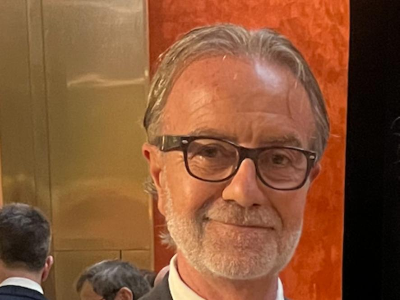
Professor Luca Pani, Full Professor of Pharmacology and Toxicology at the University of Modena and Reggio Emilia and Professor of Clinical Psychiatry at the University of Miami, will continue his work on the Scientific Committee of the Human Technopole Foundation in Milan—Italy’s national institute dedicated to biomedical research, genomics, data science, and the development of shared infrastructures for the scientific community.
“I welcome this four-year reappointment with a strong sense of responsibility. Human Technopole is playing an increasingly central role as an open national infrastructure, bringing together basic research, genomics, medicine, artificial intelligence, and technology transfer. In this context, the Scientific Committee is tasked with ensuring rigour, an international outlook, and strategic coherence. Recent data show that Human Technopole has now reached a critical mass that can translate into tangible impact for Italian research, precision medicine, and the country’s competitiveness in knowledge-intensive sectors,” commented Professor Pani.
The Scientific Committee is the advisory body of the Human Technopole Foundation. Appointed by the Board of Governors, it assesses the Institute’s scientific activity protocols in terms of quality and alignment with its multi-year strategic plans. As such, it represents a key governance structure, supporting Human Technopole’s development during a crucial phase of its scientific and institutional consolidation.
Human Technopole’s mission is to improve human health and develop new technologies through four core pillars: advancing cutting-edge research, providing shared infrastructures to the national scientific community, supporting advanced training, and promoting technology transfer. This vision is also reflected in its five National Facilities, dedicated to genomics, genome editing and disease modelling, structural biology, optical microscopy, and data management and analysis. The MIND campus now spans 20,000 square metres, with completion of the South Building scheduled for 2028 as part of the 2024–2028 Strategic Plan.
The institute’s growing importance is also reflected in its figures. Since 2024, Human Technopole has launched more than 14 new collaborations with universities, hospitals, and research centres, secured €11 million in international external funding, and achieved a workforce composed of 54% women. Regarding the National Facilities, between pilot calls concluded at the end of 2024 and throughout 2025, Human Technopole received 430 access applications, with 239 projects approved and a 147% year-on-year increase in demand. Furthermore, the institute now reports the capacity to support large-scale whole genome sequencing of at least 10,000 samples per year—strengthening its role as a national hub for genomic medicine and advanced biomedical data management.
Professor Pani’s presence on the Scientific Committee therefore represents not only recognition of the international standing of Unimore’s Pharmacology group—built across academic activity, clinical research, regulatory science, and innovation—but also a sign of Human Technopole’s growing importance as a platform connecting research, healthcare, technology, and development. In this context, expertise capable of integrating science, health policy, and regulatory innovation will be increasingly crucial in supporting the Institute’s next phase of growth and its positioning at both European and global level.
Categorie: International - english, Notizie_eng
Articolo pubblicato da: Ufficio Stampa Unimore - ufficiostampa@unimore.it il 23/03/2026