

Unimore honoured for research into innovative therapies for retinitis pigmentosa
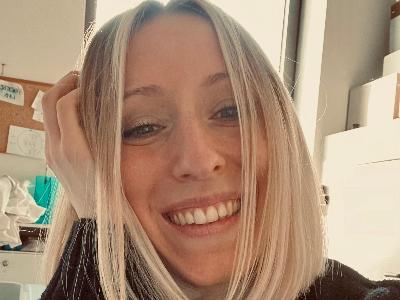
A significant recognition for Unimore’s research: Dr Sabrina Cuoghi, a PhD candidate on the HIPTECH doctoral programme, was awarded the Best Poster Prize at the 24th Emilia-Romagna Chemistry Day, held in December 2025 at the University of Ferrara.
The award was conferred for an innovative research study in the field of nanomedicine applied to ocular diseases, focused on the development of advanced and non-invasive drug delivery strategies for the treatment of autosomal dominant retinitis pigmentosa (adRP). This is a rare genetic disorder caused by mutations in the rhodopsin gene – including the P23H variant – which lead to protein misfolding and progressive degeneration of photoreceptors.
The research activity originated from a project funded by Unimore, which also involved the research groups of Professor Francesca Fanelli and Professor Valeria Marigo. Dr Sabrina Cuoghi is currently carrying out her doctoral training under the supervision of Professor Barbara Ruozi, within the TEFARTI Nanotech Group.
The work also falls within the framework of the PNRR initiatives, in particular the National Centre and the Extended Partnership in Precision Medicine, where the development of advanced and innovative drug delivery systems represents a strategic element for achieving increasingly targeted and personalised therapeutic goals.
From a scientific perspective, the study aims to develop an innovative eye drop formulation for the administration of 13-cis-5,8-epoxy retinoic acid (ERA), a molecule that has shown efficacy as a molecular chaperone in preclinical models of autosomal dominant retinitis pigmentosa associated with the P23H mutation. The research stems from the limited ability of the drug, when administered as an unformulated solution, to effectively reach the retina.
The proposed approach represents an alternative to current therapies based on intraocular injections, aiming instead for a self-administered, less invasive and better-tolerated solution. The strategy is based on the use of cyclodextrins, which improve the solubility and permeability of hydrophobic molecules. Preliminary studies with a structurally related retinoid have demonstrated the formation of soluble and stable complexes with cyclodextrins already approved for ocular use, making it possible to optimise formulation conditions with a view to future applications involving ERA.
“I am extremely satisfied with the work carried out by Sabrina, with the commitment she has shown and with the scientific rigour of her path,” comments Professor Barbara Ruozi . “This recognition goes beyond the individual result and highlights the contribution of all the researchers involved, confirming the effectiveness of an approach based on collaboration and interdisciplinarity.”
“The growth of our PhD candidates is increasingly evident,” underlines Professor Giovanni Tosi, Coordinator of the Doctoral Programme. “Research training is a long and complex journey, but results like this demonstrate how commitment and scientific quality receive significant recognition. These achievements are the result of solid planning, but above all of the value of the young researchers involved.”
“I am very pleased with this result,” says Dr Sabrina Cuoghi, “partly unexpected, which represents a strong motivation and a new source of energy in my scientific journey. After an experience as a research fellow, I am happy to have embarked on a high-level PhD programme at Unimore and to be involved in broad-ranging, strongly interdisciplinary studies. This environment offers continuous interaction with stimulating scientific communities, contributing significantly to my professional and personal development.”
The award confirms Unimore’s role as a point of reference in the development of nanomedicines and innovative health technologies, strengthening the University’s commitment to advanced research and precision medicine.
Categorie: International - english, Notizie_eng
Articolo pubblicato da: Ufficio Stampa Unimore - ufficiostampa@unimore.it il 14/01/2026